Navigation & autonomy
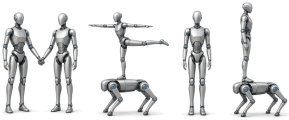
Helping autonomous vehicles perceive more than their own sensors can. Cars share point clouds with their neighbors, and we are making their alignment fast enough to catch hidden obstacles in time.
Loyola University Chicago · Computer Science
We study how robots learn to move through and act in the physical world: humanoids that teach themselves agile skills, one model that can control many different robot bodies, and vehicles that see beyond their own line of sight.

The Navigation and Embodied Intelligence Lab (NEIL) is a robotics research group in the Department of Computer Science at Loyola University Chicago, led by Neil Klingensmith and George K. Thiruvathukal. Our work sits where machine learning meets physical systems. We train robot controllers with reinforcement learning and self-play, build models that share skills across different robot bodies, and make perception fast enough to run on the road.
Much of our research starts in GPU-accelerated physics simulators such as MuJoCo and Genesis, where robots can gather billions of steps of experience. We build those simulations to match the real world, down to Gaussian-splat renderings of our own lab, so that what a robot learns there can carry over to real hardware. The lab is a team of PhD students and undergraduates, and our work is supported by the Air Force Office of Scientific Research.
Helping autonomous vehicles perceive more than their own sensors can. Cars share point clouds with their neighbors, and we are making their alignment fast enough to catch hidden obstacles in time.
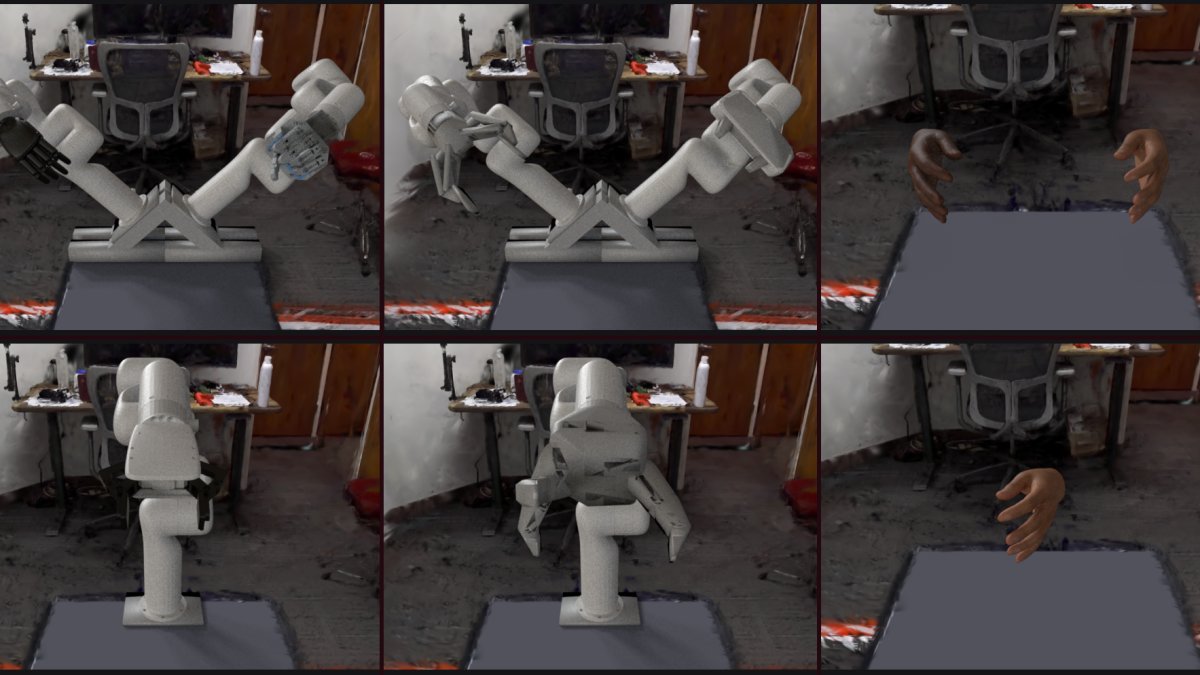
One model for many bodies. We treat behavior as a language, so a single policy can control single arms, two-arm robots, grippers, dexterous hands and even human hands.
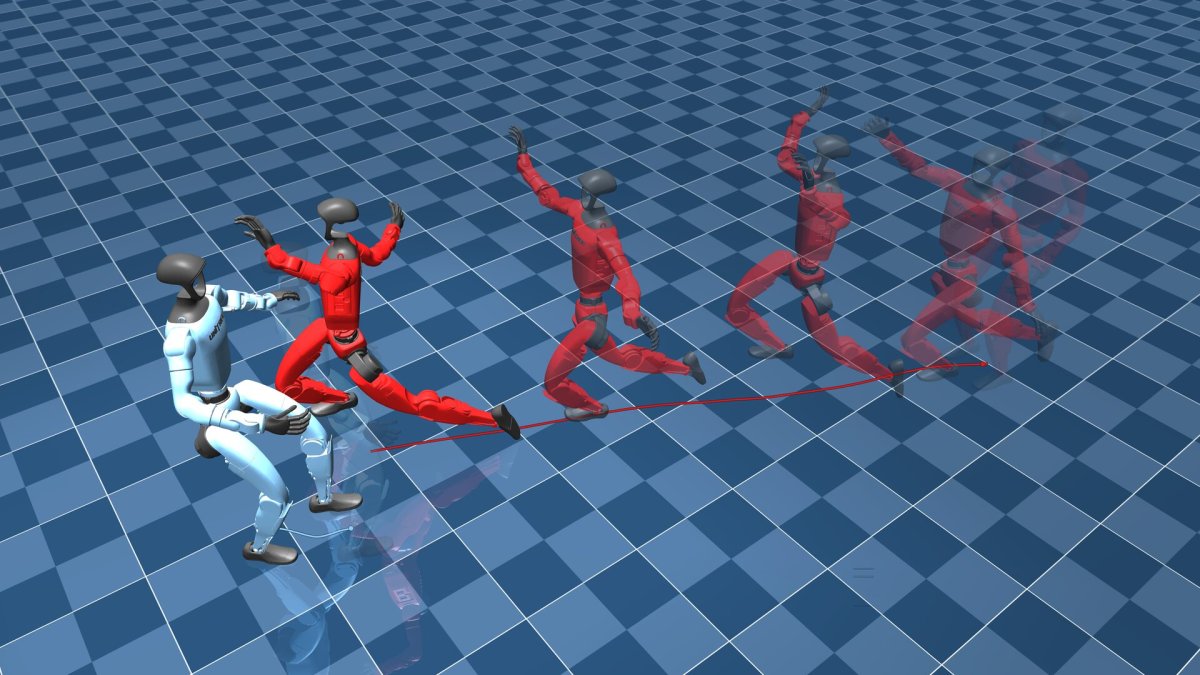
Teaching robots to move without hand-tuned rewards. Humanoids playing tag against a league of their own past selves discover sprinting, dodging and diving from a win-or-lose signal.
Active
Humanoid robots that learn agile moves by playing tag against each other.
Active
Behavior is a Language: one model for controlling many different robot bodies.
Active
Letting autonomous vehicles see beyond their line of sight by sharing point clouds.
We welcome Loyola students, both undergraduate and graduate, who want to work on robot learning, simulation and autonomous systems. Undergraduates in the lab do real research and co-author papers alongside PhD students. If you are interested, email one of the faculty with a short note about your background and what you would like to work on.